Xinjiang: CECC Commissioners Seek Import Restrictions on Forced Labor Made Goods
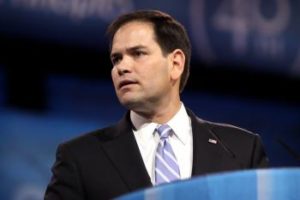
(Washington)—U.S. Representative James McGovern (D-MA) and U.S. Senator Marco Rubio (R-FL), the Chair and Cochair, respectively, of the bipartisan and bicameral Congressional-Executive Commission on China, today released a letter sent to Mark A. Morgan, Acting Commissioner of U.S. Customs and Border Protection (CBP). In the letter, the Chairs called on CBP to enforce existing U.S. law by investigating and blocking goods made in the Xinjiang Uyghur Autonomous Region (XUAR) with forced labor. Also signing the letter were CECC Commissioners Senators Jeff Merkley (D-OR) and Steve Daines (R-MT) and Representatives Marcy Kaptur (D-OH), Christopher Smith (R-NJ), Tom Suozzi (D-NY), and Vicky Hartzler (R-MO). The signed letter can be found here.
The letter follows a recent CECC hearing entitled “Forced Labor, Mass Internment, and Social Control in Xinjiang,” where witnesses detailed the Chinese government’s efforts to encourage manufacturing using the labor of Uyghur and other Turkic Muslim minorities, including those detained in mass internment camps. Products made with forced labor have reportedly been sold globally by companies such as Adidas, H&M, and Esprit.
“We note the action taken by the CBP recently to block the import of garments produced by the Hetian Taida Apparel Company in the XUAR. This step sends an important message, but there is compelling evidence to suggest that manufacturing using forced labor is not only widespread but integral to the Chinese government’s campaign of repression in the XUAR. There is a substantial risk that apparel made in the XUAR, or with XUAR manufactured components, is made with forced labor. The risk of forced labor is so great that it is difficult, if not impossible, for companies to conduct appropriate due diligence of their supply chains in the region. In addition, evidence suggests that if a factory in the XUAR employs forced labor, the entire corporate group that controls the factory is likely affected by forced labor,” the CECC Commissioner wrote.
The CECC Commissioners asked Acting Commissioner Morgan to take “aggressive action” by issuing a “Withhold Release Order” to stop the import of textiles or other manufactured goods made in the XUAR with forced labor and ensuring “that the United States and American consumers are not complicit in the mass surveillance and internment of over one million Uyghurs and other ethnic minority groups in the XUAR, actions which may constitute ‘crimes against humanity.’”
The full text of the letter can be found here and below.
Mark A. Morgan
Acting Commissioner
U.S. Customs and Border Protection
Dear Acting Commissioner Morgan:
We are writing to express our concern that imports made with forced labor from China’s Xinjiang Uyghur Autonomous Region (XUAR) have entered the United States. We ask that you take all necessary action to ensure that the United States and American consumers are not complicit in the mass surveillance and internment of over one million Uyghurs and other ethnic minority groups in the XUAR, actions which may constitute “crimes against humanity.”
Specifically, we ask Customs and Border Protection (CBP) to use its authority under 19 U.S.C. §1307 to investigate and block imports made with forced labor in the XUAR from entering the U.S. market and, where appropriate, pursue criminal investigations related to the use of forced labor to produce goods being imported into the United States.
We note the action taken by the CBP recently to block the import of garments produced by the Hetian Taida Apparel Company in the XUAR. This step sends an important message, but there is compelling evidence to suggest that manufacturing using forced labor is not only widespread but integral to the Chinese government’s campaign of repression in the XUAR. There is a substantial risk that apparel made in the XUAR, or with XUAR manufactured components, is made with forced labor. The risk of forced labor is so great that it is difficult, if not impossible, for companies to conduct appropriate due diligence of their supply chains in the region. In addition, evidence suggests that if a factory in the XUAR employs forced labor, the entire corporate group that controls the factory is likely affected by forced labor.
It is our understanding that when information reasonably indicates that merchandise covered by Section 1307 is being imported, the CBP Commissioner can issue a withhold release order (WRO) to prevent goods from entering the U.S. market. Numerous media reports show that products and materials made with forced or involuntary labor in the XUAR are present in the supply chains of companies that sell to consumers in the United States, including gloves made by the Yili Zhouwan Clothing Manufacturing Company and yarn from the Huafu Fashion Company used in products sold by Adidas, H&M, and Esprit. We have included a list of companies reportedly involved in manufacturing with forced labor in the XUAR.
Forced labor is part of a larger Chinese government policy of social control in the XUAR. The Chinese government offers subsidies to companies that operate factories in the XUAR and they employ current and former detainees of the internment camps who work in food, textile, and other manufacturing jobs, including electronics. There are also reports that forced or involuntary labor is required of individuals who have not been detained. When parents are detained or engaged in forced labor, authorities often remove their children from their families in a campaign to systematically detach them from their ethnic, language, and religious roots.
It seems that the evidence available meets the evidentiary standard outlined in regulations at 19 CFR 12.42(e). We ask you to issue a WRO that includes companies identified as producing textiles or other manufactured goods in the XUAR with forced labor.
In addition, there are a substantial number of prominent Chinese and Hong Kong-based companies with major garment, yarn spinning and agricultural operations in the XUAR or that manufacture products with materials processed in the XUAR. Working with other relevant agencies, and with information provided by nongovernmental experts, we ask that you provide us with a report that includes all the products made, wholly or in part, with forced labor from the XUAR and a list of Chinese companies engaged in the introduction of such goods to global supply chains. If this report develops additional evidence that a wide array of goods are being made with prohibited forms of forced, slave, convict, or indentured labor, we ask that you publish a formal finding on the companies involved to ensure that U.S. consumers are not subsidizing egregious human rights abuses in the XUAR.
It is time the Administration took aggressive action to stop all imports of forced labor-made goods assembled or manufactured in the XUAR and to fully enforce Section 1307 as Congress intended.
We look forward to working with you on this important matter.
Media Contact: Scott Flipse
Director of Policy & Media Relations
Congressional-Executive Commission on China (CECC)
(202) 226-3777 (desk)
(202) 308-6062 (cell)

Campaign for Uyghurs
Campaign for Uyghurs
We defend the human rights of Uyghur people and the free world by exposing and confronting the Chinese government's genocide, and empowering Uyghur women and youth in the diaspora.