Female Detainees at Xinjiang Internment Camps Face Sterilization, Sexual Abuse: Camp Survivor
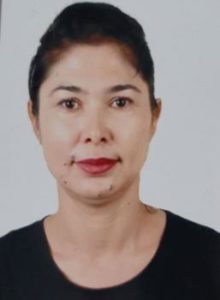
Female detainees at internment camps in northwest China’s Xinjiang Uyghur Autonomous Region (XUAR) are routinely forced to take medication that affects their reproductive cycles, and are tortured, denied treatment for health problems, and subjected to sexual and other forms of abuse, according to a former inmate.
Tursunay Ziyawudun, a 41-year-old Uyghur woman from Kunes (Xinyuan) county, in the XUAR’s Ili Kazakh (Yili Hasake) Autonomous Prefecture, spent a total of nine months at one of the region’s vast network of camps, where authorities have held up to 1.5 million Uyghurs and other Muslim ethnic minorities accused of harboring “strong religious views” and “politically incorrect” ideas beginning in April 2017.
Ziyawudun had married an ethnic Kazakh doctor from Kunes named Haliq Mirza in June 2008 and five years later the couple relocated to Kazakhstan, where they had a son and set up a medical clinic. While Mirza was granted Kazakh citizenship, authorities repeatedly refused Ziyawudun’s applications because she is Uyghur, she told RFA’s Uyghur Service from Kazakhstan where she now resides.
On Nov. 13, 2016, Ziyawudun returned to Kunes county to stay with her family and during the ensuing months saw authorities implement several new policies targeting Uyghurs, including the confiscation of their passports and the criminalization of those who had traveled abroad.
Authorities took Ziyawudun to an internment camp on April 11, 2017 without offering her or her family a reason, amid a rollout of a new policy of mass incarceration in the region, she said, although “the situation was not so severe, as it was only when they had just started arresting people” and she was released after one month, in part due to poor health.
However, Ziyawudun was unable to obtain a passport and could not join her husband in Kazakhstan, and on March 10, 2018 was again detained without reason.
This time, she said, the situation at the facility had become much worse, and many of the dozen women she shared quarters with endured poor treatment, including forced sterilization.
“There were women who were inside for one year and during that entire time they never had their monthly period,” Ziyawudun said, adding that camp authorities regularly “took women to the hospital and operated on them so that they no longer could have children” or “forced them to take medicine.”
“I was taken to a hospital to undergo a [sterilization] operation, but because I have always suffered from a gynecological condition the doctor said I could suffer complications that include death, so they spared me,” she said.
Ziyawudun also described torture, and suggested that her minders wanted to find out why she and her husband had moved to Kazakhstan.
“Their methods of torture were always different, but a common practice was to tie you up on a metal chair during interrogation,” she said.
“They cut off our hair, after pulling it through the bars of [our cell], including that of elderly women. We were all handcuffed, shackled, and frequently called out for interrogation. The screaming, pleading, crying, is still in my head.”
Other abuses
In addition to forced political indoctrination and what she called “brainwashing about how the U.S. is the enemy,” Ziyawudun said that women in her cell were made to monitor one another for transgressions of camp rules and were regularly fed either a substandard diet or nothing at all.
She also described wilful negligence on the part of camp authorities who she said often ignored detainees’ requests for medical treatment.
“They didn’t care—there were cases of women suffering from infections who could not pass water, and there were elderly ladies in their 70s or 80s who couldn’t walk properly, but they just left them to suffer,” she said.
When asked about recent reports by former detainees of rape and other abuse in the XUAR camp system, Ziyawudun broke down.
“We were all helpless and unable to defend ourselves,” she said.
“We all went through all kinds of mistreatment, but even when we saw such abuse we were powerless to do anything about it.”
Camp officials would come in the middle of the night and take women away, she said.
“They would shout, ‘Get up and come with us,’ and after that, we would never see them again,” she said. “I later learned that several people died in the hospital.”
According to Ziyawudun, at one point, authorities dragged the women out of the cell and informed them that they would be charged with crimes and sentenced to prison in show trials.
“The poor women cried and screamed in horror, but [the guards] didn’t care about their pleading,” she said.
“Some women received sentences of between five and 10 years. Elderly women were crying out, asking, ‘What is happening to my life now? How can I spend 10 years in prison? What life do I have left? What have I done to be given a prison sentence?’ They cried so helplessly.”
Ziyawudun said that of all the women in the cell, only she and one elderly lady were spared from allegations of crimes committed, adding that she believes officials were afraid to charge her because her husband is a Kazakh national.
Enduring toll
Eventually, Ziyawudun was released from the camp on Dec. 25, 2018, and said that on returning to the home of her family she could see the toll that Beijing’s policy of mass incarceration was taking on the Uyghur community.
“Women who were let out turned to alcohol, saying that they had been forced to renounce their God,” she said.
“We wondered what we had done wrong to deserve such treatment. As a people, we couldn’t face such reality, so many people numbed themselves by drinking alcohol.”
While Ziyawudun was later given her passport and allowed to return to Kazakhstan to join her husband and their son, she told RFA that many of her relatives back in Kunes county have since been taken to internment camps themselves.
“Nearly all of my family and friends are in their hands,” she said. “I cannot imagine what kind of horror they are going through.”
While Beijing initially denied the existence of internment camps, China this year changed tack and began describing the facilities as “boarding schools” that provide vocational training for Uyghurs, discourage radicalization, and help protect the country from terrorism.
Reporting by RFA’s Uyghur Service and other media organizations, however, has shown that those in the camps are detained against their will and subjected to political indoctrination, routinely face rough treatment at the hands of their overseers, and endure poor diets and unhygienic conditions in the often overcrowded facilities.
Mass incarcerations in the XUAR, as well as other policies seen to violate the rights of Uyghurs and other Muslims, have led to increasing calls by the international community to hold Beijing accountable for its actions in the region.
In September, at an event on the sidelines of the United Nations General Assembly in New York, U.S. Deputy Secretary of State John J. Sullivan said that the U.N. has failed to hold China to account over its policies in the XUAR and should demand unfettered access to the region to investigate reports of the mass incarceration and other rights abuses against Uyghurs.
Reported by Gulchehra Hoja for RFA’s Uyghur Service. Translated by RFA’s Uyghur Service. Written in English by Joshua Lipes.

Campaign for Uyghurs
Campaign for Uyghurs
We defend the human rights of Uyghur people and the free world by exposing and confronting the Chinese government's genocide, and empowering Uyghur women and youth in the diaspora.